Cash Register Rolls look simple, but the right paper affects print clarity, checkout speed, and daily operating costs. A roll must match the printer, transaction volume, and storage needs. A narrow receipt that fades too quickly can frustrate customers and staff.
The main options are thermal, bond, and carbonless rolls. Thermal paper prints through heat, so it needs no ink ribbon. Bond paper uses an inked ribbon and can suit printers designed for impact printing. Carbonless rolls create duplicate transaction records, often using layered paper. Some thermal rolls also come with BPA-free or phenol-free coatings. Those labels describe materials, not guaranteed performance, so check product specifications.
Market context helps explain why roll choices matter. Grand View Research estimated the global thermal paper market at about $4.1 billion in 2023, with continued growth projected through 2030. That figure covers thermal paper uses beyond checkout receipts, including labels and tickets; it is not a receipt-roll sales total. The distinction matters. For buyers, the useful question is not simply which type is most popular, but which fits the printer and workflow. A busy café may value fast, clear thermal receipts, while a business needing duplicate records may prefer carbonless paper. There is no perfect roll. Even core size and roll length can cause avoidable delays, and these details are easy to overlook.
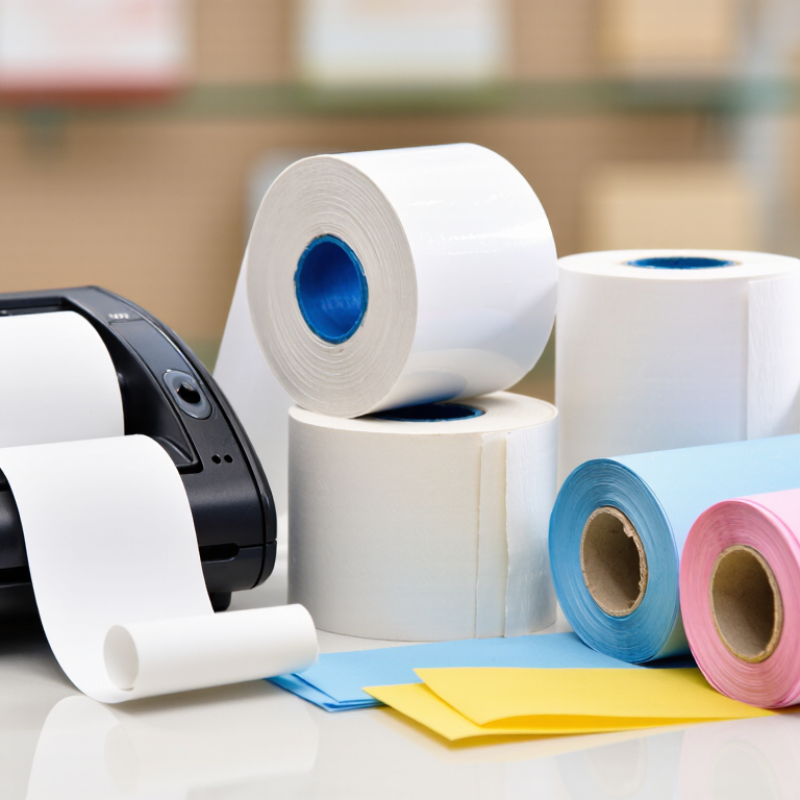
What Are the Top Types of Cash Register Rolls?
Classify Register Rolls by Print Method: Thermal, Bond, and Carbonless
Thermal rolls create text when a heated printhead activates a coated surface. No ink ribbon is needed. A receipt can emerge quickly, but heat, sunlight, and friction may fade the image. Grand View Research estimated the global thermal paper market at about USD 4.1 billion in 2023, reflecting broad demand across retail and other applications. This is a market-value estimate, not a count of register rolls.
Bond rolls use ordinary paper and require an ink ribbon or compatible impact printer. They suit settings where staff need a durable paper record, though printing may be slower and supplies add up. Carbonless rolls or forms transfer writing pressure through coated layers, producing a duplicate without a separate carbon sheet. That can help when a customer and shop both need a copy. Check the printer path and roll dimensions before ordering; the wrong stock can jam or print poorly.
The choice depends on the counter’s daily rhythm. A busy checkout often benefits from the speed of thermal printing. A service desk may prefer carbonless copies for handwritten details. Bond paper is straightforward, but only with the right ribbon and printer. I still find one detail easy to miss: a clear receipt today does not guarantee a legible record months later. Store samples away from heat and bright light.
Thermal rolls suit busy checkout counters because heat creates text directly on coated paper, without an ink ribbon. The printer in this example accepts 58 mm and 80 mm rolls, but width affects more than appearance. A 58 mm roll makes a narrower receipt and may reduce paper use for short transactions. An 80 mm roll leaves more room for item descriptions, return details, and a clear logo-free layout. Width matters. Staff should check the printer setting, paper guide, and roll core before loading stock; a roll that looks close can still feed unevenly.
Choosing between the two widths also depends on customer needs and counter habits. A Grand View Research analysis estimated the global thermal paper market at about US$4.3 billion in 2023 and projected 5.2% annual growth through 2030. That estimate reflects broad demand, not a promise that every roll fits every machine.
For dependable printing, compare the roll width and maximum diameter with the printer’s specifications, then test a few receipts. Look for dark, legible text and clean edges. One easy detail to miss: thermal paper can fade with heat, sunlight, or friction, so avoid storing receipts beside a hot display or in a wallet rubbing against keys. The right width is a practical choice, not a universal rule.
Bond rolls are single-ply paper rolls used with impact printers that print through an ink ribbon. The print head presses the ribbon against the paper, leaving dark characters on the surface. You can often hear a light tapping sound as a receipt prints. Simple, but dependable.
Unlike thermal paper, bond paper has no heat-sensitive coating. A thermal printer will not produce a readable receipt on it. Check that the register uses a ribbon-based impact printer, and match the roll width and core size to its paper compartment. A roll that is too wide may rub against the guides; one with the wrong core may not feed smoothly.
Bond receipts can be useful when heat or bright light might fade thermal printing. However, the single layer creates only one original copy. If the ribbon is worn, letters may look pale or incomplete, especially near the end of a long shift. It is easy to blame the paper, though the ribbon or print head may be the real problem. I would inspect a sample print before ordering a large supply.
| Roll type | Paper layers | How it prints | Common uses | Key considerations |
|---|---|---|---|---|
| Bond paper rolls | Usually 1-ply | Impact printing; requires an ink ribbon | Older cash registers and receipt printers designed for impact printing | Check printer compatibility, roll width, core size, and maximum roll diameter. |
| Thermal paper rolls | Usually 1-ply | Heat-sensitive coating darkens under a thermal printhead; no ink ribbon needed | Most modern point-of-sale receipt printers and many self-service terminals | Keep away from excess heat, direct sunlight, and chemicals that can affect print legibility. |
| Carbonless paper rolls | Typically 2-ply or 3-ply | Pressure from an impact printer transfers an image to lower copies | Transactions that need duplicate or triplicate copies, such as customer and business records | Requires a compatible impact printer; verify the number and sequence of plies. |
Roll dimensions and printer compatibility vary by equipment. Confirm the required width, roll length or diameter, and core size before ordering.
Carbonless cash register rolls create copies without a separate carbon sheet. Pressure from a pen or print mechanism activates coatings between the paper layers. The marks transfer onto the sheets beneath. No loose carbon paper.
A two-ply roll usually produces an original and one duplicate, useful when a customer and a store both need a record. The cashier keeps one copy; the customer takes the other. Simple, but practical.
Three-ply stock adds a second copy for another purpose, such as an office file or a service department record. Copy colors can make each sheet easier to route.
The layers must stay aligned, or details near an edge may transfer poorly. Firm writing helps. Very light handwriting can leave a faint copy, especially on small checkboxes or thin strokes. That can be frustrating.
Staff should test the roll with their usual printer and writing tools before ordering in bulk. Also check the roll width, core size, and ply count; a paper that produces clear copies is still unsuitable if it does not fit the register.
These rolls save time, though separating and filing several sheets can feel slower during a busy shift.
Cash register rolls are not all made alike. Thermal rolls develop text through heat, while bond rolls need an inked ribbon. Carbonless rolls use coated sheets to create duplicate copies. The compliance question applies specifically to thermal paper.
Under REACH Annex XVII, entry 66, thermal paper containing BPA at or above 0.02% by weight cannot be placed on the EU market. The European Commission set this restriction in Regulation (EU) 2016/2235, and ECHA’s restriction guidance identifies the same threshold. That figure is a limit, not a claim that every compliant roll is BPA-free. Buyers should request current supplier declarations and test documentation, and check that the paperwork identifies the paper grade and test method. Small details matter. A vague “compliant” stamp is not much evidence.
At a checkout counter, a receipt may be handled repeatedly, folded into a wallet, or left beside food packaging. So procurement teams should look beyond price and roll size. Ask whether the stock is thermal, what developer chemistry it uses, and how compliance is verified. REACH’s BPA threshold does not, by itself, confirm that an alternative chemical has been fully assessed. This part can be easy to overlook. Independent laboratory testing adds confidence, although testing plans and sampling quality still need scrutiny. The paperwork may be imperfect; it deserves a second look.
The printer accepts 58 mm and 80 mm rolls. Width matters.
A 58 mm roll makes narrower receipts and may use less paper for short transactions. An 80 mm roll offers more room for item details and return information.
Check the printer setting, paper guide, roll core, and maximum roll diameter. A roll that looks close may still feed unevenly.
Print a few test receipts. Look for dark, readable text and clean edges. Not every roll will feed perfectly.
Keep them away from heat, sunlight, and friction. A receipt rubbing against keys in a wallet may fade.
They create an original and one duplicate without loose carbon paper. The cashier can keep one copy while the customer takes the other.
It provides two copies for separate records, such as an office file and a service department. Extra sheets can slow filing during a busy shift.
Keep the layers aligned and write firmly. Thin strokes or light handwriting may transfer faintly, especially in small checkboxes. Test the roll with the usual printer and writing tools before buying in bulk.
Cash Register Rolls are available in three main types, each suited to different printing and record-keeping needs. Thermal rolls use heat-sensitive paper to produce images without ink ribbons, and compatible printers may support common widths such as 58 mm or 80 mm. Bond rolls are single-ply paper and require a printer that uses an ink ribbon. Carbonless rolls come in two-ply or three-ply formats, allowing a transaction to create duplicate or multiple copies for customers and business records.
When selecting thermal paper, businesses should also consider its composition and applicable safety requirements. For example, the EU REACH framework sets a 0.02% threshold for BPA in thermal paper. Choosing the right roll involves matching the paper type and width to the printer, while considering whether clear receipts, ribbon-based printing, or extra copies are most important.

Jingkuo