Top 10 Thermal Receipt Paper Manufacturers Worldwide

Time:2026-11-02 Author:Oliver
0%

Thermal Receipt Paper may look like a simple roll, but its performance depends on precise coating chemistry, consistent thickness, and reliable heat response. At a checkout counter, a receipt must print clearly in seconds. In a warehouse, labels and transaction records may need to remain legible through handling and storage. These practical demands help explain why manufacturers compete on more than price.

Grand View Research’s Thermal Paper Market Size, Share & Trends Analysis Report estimates the global market at approximately USD 4.4 billion in 2023 and projects continued growth through 2030. That outlook reflects demand from retail, logistics, healthcare, and other point-of-sale applications. Market estimates vary by research method, so they are best treated as directional, not exact. Product selection also deserves scrutiny: print sensitivity, image durability, coating uniformity, and chemical composition can differ across suppliers. A roll that feeds smoothly but fades quickly is still a poor choice.

This guide compares ten manufacturers worldwide, focusing on capabilities buyers can assess: product range, production scale, quality controls, and documented sustainability practices. One limitation matters. No verifiable, named expert quotation was provided for this introduction, so attributing a memorable line to an industry specialist would risk inventing evidence. A sourced quotation should be checked against an interview or primary publication before publication. The comparison ahead aims to be useful, but supplier claims still deserve independent verification.
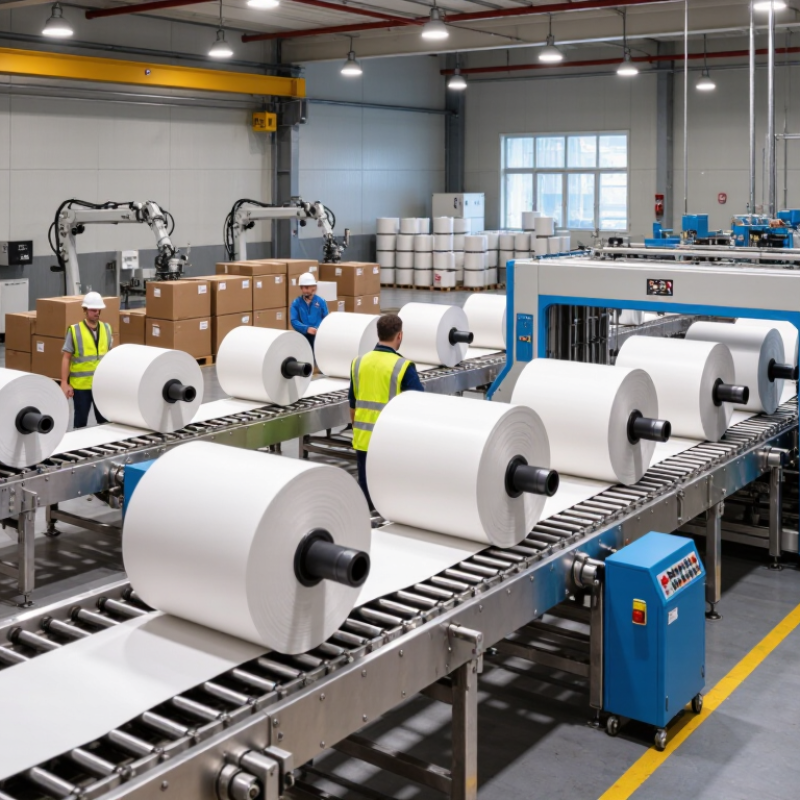
Top 10 Thermal Receipt Paper Manufacturers Worldwide

Thermal Receipt Paper: Composition, Uses, and Industry Scope

Thermal receipt paper is a coated substrate that develops an image when heated. Its base is usually smooth paper, topped with a heat-sensitive layer. That layer commonly combines leuco dyes, developers, and sensitizers; an optional topcoat helps resist moisture and abrasion. The image appears instantly. No ink ribbon is needed, which suits compact point-of-sale printers. Yet heat, oils, and bright light can darken or fade receipts. Some formulations use phenolic developers, while “phenol-free” does not mean chemical-free. That distinction is easy to miss.

Uses extend beyond checkout counters to self-service kiosks, parking terminals, ticketing, and shipping labels. Grand View Research’s 2024 thermal paper market report valued the global market at about US$4.3 billion in 2023 and projected a 5.2% compound annual growth rate for 2024–2030. These figures describe a broad market, not receipts alone. Demand follows retail activity, digital-payment infrastructure, and replacement cycles for printers and consumables. Paper weight, coating sensitivity, print durability, and storage conditions all affect performance. Recycling can also be complicated by coatings, so local collection practices matter. The industry’s scope is wider than the small roll beside a register—and its material choices deserve closer scrutiny.

Criteria for Comparing Manufacturers Across Global Markets

Comparing thermal receipt paper manufacturers across global markets requires more than checking the quoted price per roll. A low price may conceal inconsistent thickness, short roll length, or uneven coating. Inspect paper weight, roll width, core diameter, and winding tension against the printers your customers actually use. Small details matter. Dust around a print head can cause trouble, while poor coating may produce pale, hard-to-read receipts.

Request samples from more than one production batch and test them on representative devices. Check print darkness, edge clarity, feed smoothness, and image stability after ordinary handling. Ask how the manufacturer tracks batch consistency and investigates defects. Test it first. A polished sample is useful, but it cannot show how reliably a factory controls routine production. That comparison can be inconvenient, yet it is more informative than a brochure.

Global supply adds practical criteria. Review typical lead times, export packaging, shipment flexibility, and the supplier’s ability to provide clear technical records. Confirm that the paper suits the storage conditions where it will be sold; heat and humidity can affect printed-image legibility. Environmental and chemical documentation should be specific to the product and relevant destination market. Not every comparison is neat. A manufacturer with a higher quote may offer steadier quality or more dependable delivery, but buyers should verify those advantages with samples, records, and realistic order terms.

Profiles of Ten Leading Thermal Receipt Paper Manufacturers

Thermal receipt paper makers differ in coating control, base-paper sourcing, roll conversion, and quality testing. These details matter at the checkout counter. A faint print, dusty edge, or uneven roll can slow service. The ten manufacturer profiles are best read as comparisons of production strengths, not as a universal ranking. Some producers emphasize high-volume consistency; others offer more flexibility in roll widths and core sizes. Regional delivery and technical support also shape a buyer’s experience.

A useful profile should explain how each manufacturer controls coating weight and checks print clarity. Look for practical details, such as roll-edge quality, winding tension, and performance after storage. Claims about paper composition deserve careful review, since product specifications and requirements can vary by market. A specification sheet helps, but it cannot show every production issue. Real-world samples matter.

Tips: Test sample rolls on your own printers. Check readability, feed consistency, and dust after several receipts. Ask for current technical documents, and confirm lead times in writing. Small checks help. Even a strong profile leaves questions; verify the details before choosing a supplier.

Product Range, Production Scale, and Geographic Reach

A useful comparison of the ten leading thermal receipt paper manufacturers starts with product range. Suppliers may offer standard point-of-sale rolls, ATM rolls, and wider jumbo rolls for converting. Some also produce label stock or papers with different sensitivities and coating weights. These details matter: a roll that prints clearly at a checkout may not suit a fast, high-volume kiosk. A broad catalogue can still conceal gaps in specialty grades.

Production scale is more than a headline capacity figure. Look for evidence of coating lines, slitting capacity, quality controls, and reliable access to base paper. Grand View Research estimated the global thermal paper market at about US$4.3 billion in 2023, with a forecast compound annual growth rate of 6.1% from 2024 to 2030. This is market-value data, not a measure of factory output. Scale matters. But capacity figures are not always reported on a comparable basis.

Geographic reach depends on where paper is coated, converted, stored, and shipped. A manufacturer serving several regions may shorten delivery routes, while local converting can provide more roll sizes and core formats. Asia-Pacific is identified as a major demand region in market research, reflecting broad retail and payment activity. Buyers should still check lead times and available grades by destination. Regional reach on paper can be broader than dependable supply in practice.

Factors to Consider When Choosing a Manufacturer

When comparing thermal receipt paper manufacturers, begin with the roll your printer actually uses. Check width, diameter, core size, winding direction, and roll length against your equipment. A small mismatch can cause feeding problems or wasted paper. Request samples and test them in busy conditions, not only during a quick office print. Look for sharp text, even coating, and minimal dust on the print head.

Ask how the manufacturer checks coating consistency and roll dimensions between batches. Request clear product specifications, quality records, and information about the paper’s composition. Reliable suppliers should explain how they handle defects, changes in materials, and delivery delays. Compare lead times and packaging, too: loose wrapping can expose rolls to moisture or scratches. Price matters, but unusually low quotes deserve closer questions. That judgment is not always easy.

Tips: Store sample rolls in a dry place, then test them after several days. Keep notes on print clarity, paper curl, and machine jams. Ask for a written specification before placing a large order. A sample may perform well once and still fail at scale, so trial orders are useful. Don’t skip that step.

Thermal Receipt Paper Formats to Compare

Common POS receipt roll widths are 57 mm and 80 mm. Confirm your printer’s supported width, core size, roll length, and paper weight when evaluating a manufacturer.

The chart shows format widths, not market share. Always check the printer specifications before ordering.

FAQS

What is thermal receipt paper made of?

It usually has a smooth paper base and a heat-sensitive coating. The coating often contains leuco dyes, developers, and sensitizers. Some rolls add a protective topcoat.

How does it print without ink?

Printer heat triggers a reaction in the coating, creating an image. No ribbon is needed.

Where is thermal paper commonly used?

It appears in checkout counters, self-service kiosks, parking terminals, ticketing systems, and shipping labels. The small roll has many uses.

What can make a receipt fade or darken?

Heat, oils, and bright light can affect the image. Humidity and storage conditions may also influence readability.

Does “phenol-free” mean the paper contains no chemicals?

No. It only describes certain developer choices. The coating still contains other materials, so check product-specific documentation.

How can buyers compare paper quality?

Check paper weight, roll width, core diameter, and winding tension. Test samples on the printers you actually use. Test it first.

What should a sample test include?

Check print darkness, edge clarity, smooth feeding, and image stability after ordinary handling. One polished sample cannot prove consistent production. I would not rely on it alone.

What affects supply and environmental decisions?

Review lead times, packaging, shipment flexibility, and technical records. Coatings can complicate recycling, so local collection practices matter. The details are not always neat.

How large is the thermal paper market?

A 2024 industry report estimated the global market at about US$4.3 billion in 2023. It projected 5.2% annual growth for 2024–2030, covering more than receipt paper.

Conclusion

Thermal Receipt Paper is a specially coated paper that produces text and images when exposed to heat, making it useful for receipts, tickets, labels, and other short-term records. Its composition, print performance, durability, and suitability for different devices are important considerations across retail, hospitality, transportation, and service industries. Manufacturers serve these needs through varied product specifications and production capabilities.

Comparing leading manufacturers involves looking at product range, quality consistency, production scale, supply reliability, and geographic reach. Buyers should also consider compatibility with their printers, intended use, storage conditions, order volumes, and customer support. A careful evaluation of these factors can help organizations identify a supplier that fits their operational requirements and supports dependable receipt printing across their markets.


Oliver

Oliver

Oliver is a seasoned marketing professional with a wealth of expertise in driving brand awareness and engagement. With a deep understanding of our company's product offerings, he consistently delivers high-quality content that enriches our professional blog. His insights not only shed light on......