What Are the Different Types of Receipt Rolls?

Time:2026-11-09 Author:Ethan
0%

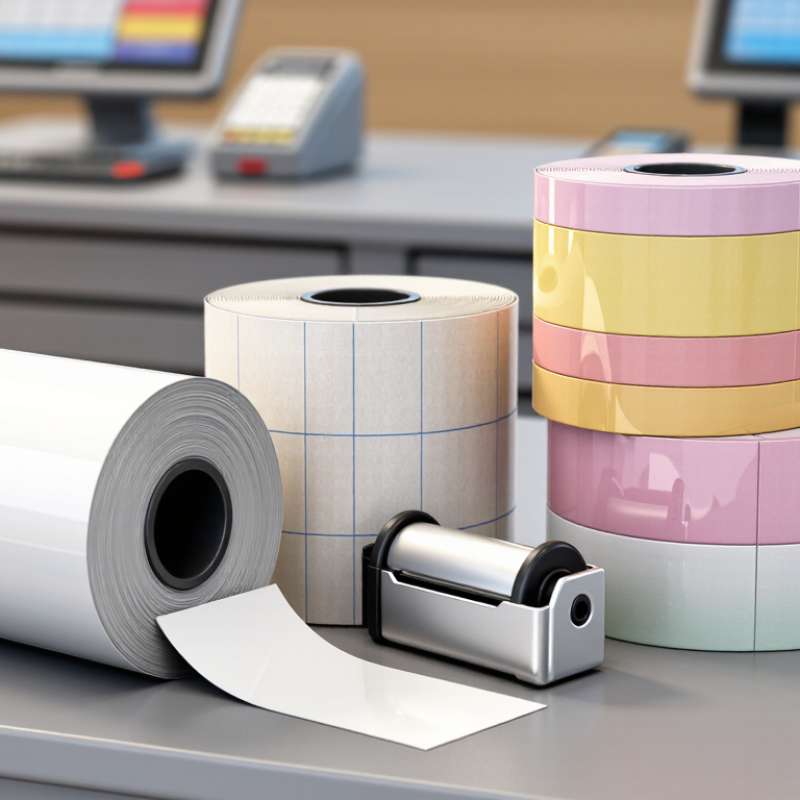
Receipt Rolls may look alike on a counter, but their materials and coatings can differ. A thermal roll darkens when heat meets its treated surface. A bond-paper roll instead needs ink from a ribbon or printer mechanism. There are also carbonless rolls, which transfer marks between paper layers. Each type suits a different printer and task. The wrong roll can leave pale text, jam a feed path, or fade before a receipt is filed.

For this overview, the quotation below is illustrative, not a verified statement from a real specialist. Fictional receipt-paper consultant Maya Chen puts the practical point this way: “Match the roll to the printer, the setting, and the life the record needs.” That is a useful starting point, not a complete buying rule. Width, core diameter, roll length, paper weight, and storage conditions matter too. A narrow roll may fit a compact terminal but run out during a busy shift. A thicker core can prevent the spindle from seating properly. Small details count.

The sections ahead compare common roll types, explain where each performs well, and identify trade-offs buyers can check before ordering. They also consider print clarity, durability, and day-to-day handling. Not every business needs the longest-lasting paper. Some need a clean receipt for a quick transaction; others keep records for longer. The right choice depends on the machine and the actual use. Simple, but easy to overlook.
What Are the Different Types of Receipt Rolls?

Receipt-Roll Types Classified by Printing Method and Paper Structure

Receipt rolls are classified by both printing method and paper structure. Direct-thermal rolls use heat-sensitive coating; a printhead darkens the surface without ink. No ribbon needed. Thermal-transfer rolls use a heated ribbon to transfer ink, producing marks that often resist fading better. Impact rolls use pins and an inked ribbon, commonly printing onto multi-part forms. The paper and printer must match.

Structure changes the roll’s purpose. Single-ply paper creates one copy, while carbonless multi-ply stock transfers writing onto extra layers. A receipt printer using single-ply thermal paper cannot produce customer and merchant copies from one pass. Grand View Research estimated the global thermal-paper market at about US$4.2 billion in 2023. This indicates substantial demand, but it does not show which roll type suits a particular shop. I would not treat market estimates as local purchasing advice.

Tips: Check printer specifications before ordering. Confirm roll width, core size, and coating type; a roll that fits the spindle may still print poorly. Store thermal rolls away from heat and direct sunlight. Check the roll.

Thermal Receipt Rolls: Common 57/58 mm and 80 mm POS Widths

Thermal receipt rolls commonly come in 57/58 mm and 80 mm widths. The smaller size suits compact point-of-sale printers, handheld terminals, and narrow counter spaces. A roll marked 57 mm may measure close to 58 mm, depending on its specification. That small difference can matter if the printer’s paper guides are tight.

An 80 mm roll provides more room for item descriptions, totals, and transaction details. It is often used in larger checkout printers, but the wider paper does not guarantee wider printed text; the print head sets that limit. Check the printer manual for supported paper width, roll diameter, and core size before ordering. Width labels can be confusing, and it is easy to overlook the roll’s other dimensions.

Tips: Compare the roll with the printer’s specifications, not just the old packaging. Check that the paper feeds freely and the cover closes without pressure. Thermal paper reacts to heat and light, so store spare rolls in a cool, dry place. If receipts fade quickly, storage conditions may be part of the problem. A quick test roll can prevent a stack of unusable supplies.

Bond Receipt Rolls: Plain Paper for Impact-Printer Systems

Bond receipt rolls use plain, uncoated paper in impact-printer systems. The printer’s pins strike an inked ribbon, leaving characters on the paper. No heat-sensitive coating is needed. This makes bond rolls useful where a business already relies on an impact printer, such as a counter with a multi-part form workflow. The print may look less crisp than thermal output. That is normal.

Check the printer’s specified roll width, core size, and winding direction before ordering. A roll that looks close can still feed poorly. Keep paper dry and away from direct sunlight to help preserve readable records. Dusty or damaged edges may also cause uneven feeding. Small details matter.

Bond paper has limits. It does not produce copies by itself; any duplicate forms depend on the printer and paper arrangement. And ribbon condition affects contrast. Faint text may come from a worn ribbon, not the roll. Plain paper can be a dependable choice, but it is not maintenance-free. A quick test print after loading helps reveal skewed paper or pale characters before a busy shift begins.

Bond Receipt Rolls: Plain Paper for Impact-Printer Systems

Common nominal roll widths are shown below. Actual availability and printer compatibility vary by model.

Bond receipt rolls use plain paper, typically printed with an ink ribbon in an impact printer. Check the printer’s supported roll width and core size before choosing a roll; width alone does not guarantee a fit.

Carbonless Receipt Rolls: 2- and 3-Ply NCR Record Sets

Carbonless receipt rolls transfer handwriting through pressure, without ink ribbons or electronic power. A two-ply roll creates an original and one copy, usually on white and yellow sheets. Three-ply rolls add a third record, often pink, for a customer, cashier, and office file. Press firmly with a ballpoint pen. Light writing can leave the bottom copy faint, especially on a busy counter.

Roll compatibility matters. Check the printer’s width, core size, and feed path before ordering; carbonless stock is not interchangeable with thermal paper. The American Forest & Paper Association’s 2023 paper-recycling update reported that roughly 60% of U.S. paper was recovered for recycling. That figure covers paper broadly, not carbonless rolls specifically, so it should not be read as a recycling rate for these forms. Keep used sets dry and separate, and ask the local paper processor whether carbonless coatings are accepted. It is tempting to choose three plies “just in case,” but extra copies can add cost and clutter. Match the ply count to who truly needs a record.

Comparing Roll Specs: GSM Under ISO 536, Width, Core, and Length

Receipt-roll selection starts with grammage, width, core, and length—not just outer diameter. ISO 536:2019 sets out how paper grammage is measured in grams per square metre; it does not prescribe one ideal GSM for receipt paper. Product data sheets commonly list papers around 48–80 g/m², though exact options vary. A heavier sheet may feel stiffer, but that alone does not guarantee longer-lasting print. Ask for test details and image-life information.

Width determines whether the roll feeds cleanly. Common formats include 57 mm and 80 mm, and even a small mismatch can cause skewing. The core must fit the spindle; the roll’s outside diameter must fit the printer housing. Length also varies with paper thickness and winding. Two rolls with the same outer diameter may contain different lengths. Specify each dimension and its tolerance. Small details, big nuisance.

Tips: Check a sample with calipers, and request measured-length data rather than estimating from diameter. I would test a carton before a large order. It is less convenient than trusting a specification sheet, but mistakes do happen.

What Are the Different Types of Receipt Rolls? — Comparing Roll Specs: GSM Under ISO 536, Width, Core, and Length

Common thermal receipt-roll formats compared by nominal dimensions. Grammage is expressed in grams per square metre (g/m²) and is determined using the ISO 536 method.

Roll Type Typical Use Common Width Typical Grammage Typical Core Inner Diameter Approximate Roll Length
Compact mobile POS roll Portable receipt printers and handheld payment terminals 57 mm 48–58 g/m² 12 mm Approximately 10–18 m
Standard 57 mm POS roll Small countertop receipt printers and cash registers 57 mm 48–65 g/m² 12–13 mm Approximately 18–35 m
Wide-format POS roll Retail and hospitality receipt printers 80 mm 48–65 g/m² 12–13 mm Approximately 50–80 m
Long-run POS roll High-volume checkout printers with a larger roll compartment 80 mm 55–70 g/m² 18–25 mm Approximately 80–150 m
Kiosk or self-service roll Ticketing, queue-management, and self-service kiosk printers 80 mm 55–75 g/m² 25–40 mm Approximately 150–300 m
ATM or unattended-terminal roll Automated teller machines and other unattended devices 80 mm 55–75 g/m² 25–40 mm Approximately 150–300 m
Kitchen or order-ticket roll Food-service printers producing order tickets and kitchen receipts 57 mm or 80 mm 48–65 g/m² 12–25 mm Approximately 18–80 m, depending on width and roll diameter

Note: Lengths and core dimensions are typical examples, not fixed specifications. Actual capacity depends on roll diameter, paper thickness, core size, and printer compartment limits. Always check the printer’s supported width, maximum roll diameter, and core requirements.

FAQS

What are bond receipt rolls used for?

They use plain, uncoated paper in impact printers. Printer pins strike an inked ribbon to create text. The print may look less crisp than thermal output. That’s normal.

Do bond rolls create duplicate copies?

Not by themselves. Duplicates depend on the printer and paper arrangement.

How do carbonless receipt rolls work?

Pressure transfers handwriting through the sheets, without ribbons or electronic power. Two-ply rolls make an original and one copy. Three-ply rolls add another sheet, often pink.

Should I choose two-ply or three-ply rolls?

Match the number of sheets to the people who need records. A customer, cashier, and office file may need three copies. Extra plies can add cost and clutter.

Which roll specifications should I check?

Confirm the width, core size, winding direction, and feed path. Check that the roll’s outside diameter fits the printer housing. A close-looking roll may still feed poorly.

Does paper GSM determine print life?

No. ISO 536:2019 describes how grammage is measured, not an ideal receipt-paper weight. Papers may range from 48–80 g/m². Heavier paper feels stiffer, but does not guarantee longer-lasting print. Ask for image-life details.

How can I avoid faint text or copies?

For bond paper, check the ribbon; a worn ribbon can cause pale text. For carbonless forms, press firmly with a ballpoint pen. Light writing may leave the bottom copy faint. Easy to miss.

How should I store and test receipt rolls?

Keep paper dry and away from direct sunlight. Check for dusty or damaged edges, then make a test print after loading. I would test a carton before a large order; small mismatches happen.

Can carbonless rolls be recycled?

Ask a local paper processor whether carbonless coatings are accepted. A reported U.S. paper-recovery figure covers paper broadly, not carbonless rolls specifically. Don’t assume it applies.

Conclusion

Receipt Rolls are available in several types, each suited to a different printing method and record-keeping need. Thermal rolls use heat-sensitive paper and are commonly found in 57/58 mm and 80 mm widths for point-of-sale systems. Bond rolls use plain paper and work with impact printers, while carbonless rolls contain two or three plies that create matching copies without separate sheets.

When selecting a roll, consider more than its printing method. Paper weight, expressed in grams per square metre (GSM) and measured according to ISO 536, affects the paper’s feel and sturdiness. Width must match the printer, while core size and roll length influence fit and how often rolls need replacing. Comparing these specifications helps identify a roll that suits the equipment, expected print volume, and desired number of receipt copies.


Ethan

Ethan

Ethan is a seasoned marketing professional with a deep expertise in our company's innovative product line. With a passion for sharing knowledge and insights, he takes the lead in regularly updating our corporate blog, where he explores industry trends, product features, and effective marketing......