Choosing Thermal Coating Paper in 2026 requires more than comparing roll prices. The right material must match the printer, application, storage conditions, and expected image life. A receipt used for two days has different needs from a medical label, shipping tag, or archival record. Small details matter. Surface smoothness affects printhead contact. Coating sensitivity influences image darkness and printing speed. Core size and roll dimensions also prevent costly equipment interruptions.
This guide examines practical selection factors through technical knowledge and real-world handling experience. It considers thermal response, coating uniformity, paper thickness, moisture resistance, and resistance to light, heat, and plasticizer contact. A reliable supplier should provide product specifications, quality-control records, and test samples. Independent testing can confirm whether the paper performs consistently across different printer models. Local regulations and customer requirements should also be verified, especially when papers may contact food, pharmaceuticals, or sensitive documents.
There is no universal best option. That assumption often fails. A low-cost roll may print clearly in a showroom but fade inside a delivery vehicle. A highly sensitive coating may reduce energy use, yet produce darker images than expected. Testing under actual conditions remains essential. Store sample rolls in sealed packaging, print representative labels, and inspect them after exposure to sunlight, humidity, friction, and heat. This process may seem slower, but it reveals weaknesses before large-scale purchasing. The following sections explain how to compare Thermal Coating Paper with greater confidence, while recognizing that every application has different priorities and compromises.
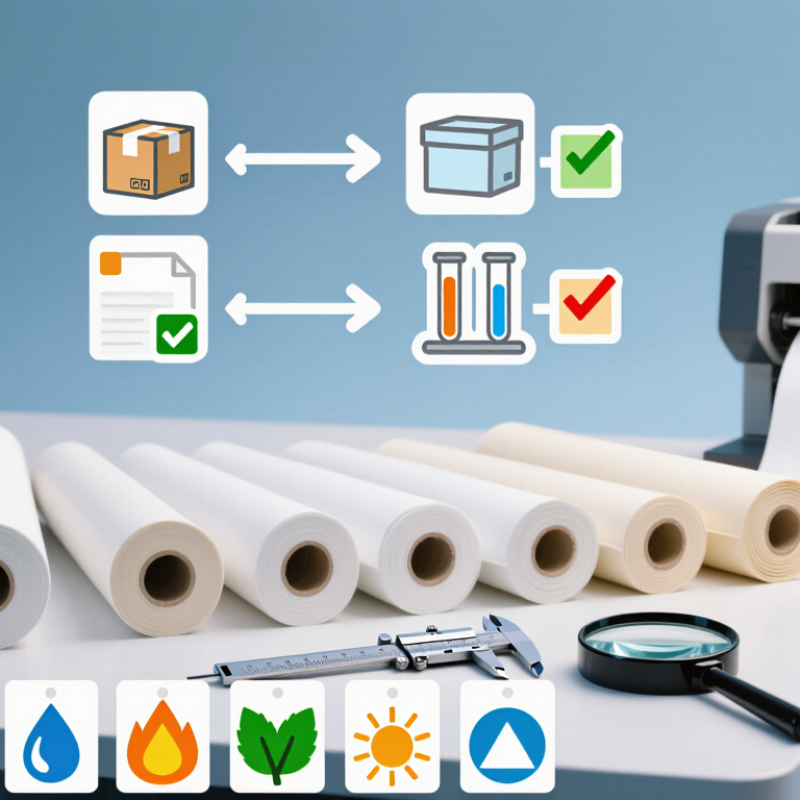
Choosing thermal coating paper in 2026 starts with the application, not the coating label. Describe what the paper must survive: receipt printers, shipping labels, shelf tags, medical records, or outdoor tickets. Note printer speed, printhead energy, roll width, core size, and daily volume. Start there. A coating that performs well at a checkout counter may fade quickly beside a sunny window. I have seen operators blame the printer when the real problem was heat, humidity, or an unsuitable paper grade.
Translate the application into measurable requirements. Specify image density, barcode sharpness, scanning distance, storage life, and resistance to water, oil, friction, and plastic contact. Consider the full temperature range, from warehouse cold to delivery-vehicle heat. For sensitive records, assess whether direct thermal or thermal transfer printing better supports retention. It matters. Use supplier technical data, but treat it as a starting point, not proof. Request samples from the same production lot and test them in the actual printer, using normal settings and realistic handling.
A practical trial should include blank storage, printed storage, repeated scanning, rubbing, folding, and light exposure. Record failures, not only successful prints. Compare dark areas, fine lines, curl, dust, and feeding stability after several days. Independent testing against recognized paper and print-performance methods can strengthen purchasing decisions. Still, no test perfectly represents every route or user habit. The first choice may be wrong. Recheck requirements when printers, packaging, or regulations change, because paper selected for today’s workflow can quietly become tomorrow’s weak point.
| Application | Typical Print Life | Recommended Basis Weight | Typical Caliper | Required Thermal Sensitivity | Image Density Target | Key Performance Requirements | Recommended Coating Structure | Important Validation Tests |
|---|---|---|---|---|---|---|---|---|
| Retail Point-of-Sale Receipts | Several days to a few months | 48–65 g/m² | 52–70 µm | High sensitivity for low-energy printing | 1.00–1.30 optical density | Fast image development, smooth feeding, low dust, good roll winding, and reliable barcode readability. | Standard direct thermal base with a balanced imaging layer and light protective topcoat. | Print-speed test, barcode verification, head-energy window, friction, curl, and roll unwind testing. |
| Self-Service Kiosk Tickets | Several weeks to one year | 60–80 g/m² | 65–90 µm | Medium to high sensitivity | 1.10–1.40 optical density | Consistent feeding, resistance to fingerprints, moderate moisture tolerance, and clean cutting or tearing. | Direct thermal paper with a durable topcoat and controlled stiffness. | Repeated print cycles, cutter interaction, moisture exposure, fingerprint rub, and image contrast testing. |
| Shipping and Logistics Labels | One to six months | 65–85 g/m² | 70–95 µm | Medium sensitivity for high-speed printers | 1.20–1.50 optical density | High barcode contrast, dimensional stability, strong facestock, dependable adhesive compatibility, and resistance to abrasion. | High-performance thermal layer with protective topcoat; adhesive and release liner selected separately for the substrate. | ANSI/ISO barcode grading, abrasion, condensation, liner release, peel adhesion, and high-speed printer testing. |
| Warehouse and Inventory Labels | Six months to two years | 70–90 g/m² | 75–105 µm | Medium sensitivity with a broad energy latitude | 1.20–1.50 optical density | Longer image stability, resistance to handling, readable small characters, and stable performance across changing temperatures. | Thermal paper with a robust protective topcoat and enhanced resistance to plasticizer and oil contamination. | Accelerated aging, oil and plasticizer exposure, rub resistance, cold-storage conditioning, and barcode verification. |
| Healthcare and Laboratory Labels | Six months to several years | 70–90 g/m² | 75–105 µm | Medium sensitivity with precise image control | 1.10–1.45 optical density | Low background activation, clear fine text, chemical resistance, low extractables where required, and dependable adhesion. | Low-background thermal coating with a protective topcoat designed for the intended disinfectants and handling conditions. | Disinfectant exposure, sterilization compatibility when applicable, smear resistance, background development, and label adhesion tests. |
| Parking and Transit Tickets | Several months to two years | 60–85 g/m² | 65–95 µm | Medium sensitivity | 1.10–1.40 optical density | Outdoor light stability, moisture resistance, easy separation, reliable machine feeding, and resistance to repeated handling. | Direct thermal coating with a protective topcoat; consider a stronger barrier layer for outdoor exposure. | Light aging, humidity cycling, wet rub, folding, ticket-feed simulation, and image retention testing. |
| Event and Admission Tickets | One day to one year | 100–180 g/m² | 110–200 µm | Medium sensitivity | 1.00–1.35 optical density | Good stiffness, premium appearance, clean perforation, optional color development, and resistance to handling. | Heavier direct thermal stock with a smooth printable surface and protective topcoat. | Perforation strength, tear propagation, bending, print uniformity, color stability, and handling simulation. |
| Scale and Weighing Labels | Several days to several months | 48–70 g/m² | 52–78 µm | High sensitivity for short print cycles | 1.00–1.30 optical density | Low static, clean die-cutting, accurate feed registration, resistance to food oils where applicable, and strong barcode contrast. | High-sensitivity imaging layer with a light protective coating and application-specific adhesive system. | Printer compatibility, static measurement, die-cut quality, oil exposure, peel adhesion, and barcode grading. |
| Long-Term Records and Archival Documents | Several years to decades | 75–100 g/m² | 80–115 µm | Low to medium sensitivity for improved stability | 1.10–1.45 optical density | Enhanced image retention, low background, resistance to light and heat, controlled chemistry, and clearly defined storage conditions. | Stabilized thermal coating with a durable barrier or topcoat; select materials according to the required retention standard. | Accelerated heat and humidity aging, light exposure, dark storage, chemical compatibility, and long-term image retention. |
| Outdoor or High-Moisture Labels | Several months to two years | 80–110 g/m² | 85–125 µm | Medium sensitivity with strong protection | 1.20–1.50 optical density | Water resistance, UV resistance, low-temperature flexibility, abrasion resistance, and stable adhesion to the target surface. | Thermal imaging layer protected by a high-barrier topcoat; synthetic or laminated constructions may be preferable for severe exposure. | Water immersion, UV aging, freeze-thaw cycling, outdoor abrasion, condensation, and adhesion after exposure. |
Print small text, barcodes, and pale gray areas at normal printer speed. Check for white gaps, weak edges, and uneven darkness. Scan the barcode. One sample is not enough.
Coating consistency can vary between lots. Request several samples and compare them under identical printer settings. This reduces the risk of trusting one unusually good roll.
Rub printed areas with a dry cloth, then a damp cloth. Touching the surface lightly can reveal sensitivity to skin oils. Record smearing, fading, and surface damage.
Leave samples for seven days near a window or warm equipment. Check fading, curling, and surface dust daily. Seven days helps, but it cannot predict every storage condition.
Yes. Paper coating and printhead settings can change image density. Print a full test sheet and watch for jams, pale areas, and excessive darkness. Test it.
Ask for recent test reports, safety data sheets, and complete material specifications. For food-related packaging, request suitable contact-compliance documents. Requirements vary by country and application.
Check fiber sourcing, recycled content, coating composition, recyclability guidance, and disposal instructions. A recycling symbol alone proves little. Claims may sound stronger than the evidence.
Keep unopened rolls in their original packaging, away from sunlight, heaters, solvents, and cleaning chemicals. A stable range near 18–25°C and 40–60% humidity is commonly suitable. Avoid damp floors and sudden temperature changes.
Record delivery dates, batch numbers, and recommended shelf life. Use older stock first. Let cold shipments reach room temperature before opening. I would recheck faded samples before ordering large quantities.
Choosing the right Thermal Coating Paper in 2026 begins with clearly defining your application, printing equipment, image requirements, and expected usage conditions. Consider whether the paper is intended for receipts, labels, tickets, packaging, or other purposes, then compare coating types, paper grades, thicknesses, brightness, smoothness, and surface characteristics. These factors influence feeding performance, print clarity, contrast, and compatibility with thermal printers.
A reliable selection should also balance print quality with durability and resistance to heat, moisture, light, friction, and chemicals. Review applicable safety expectations, sustainability goals, and storage requirements, including protection from humidity, direct sunlight, and excessive temperatures. Before making a final decision, test samples under real operating conditions to evaluate image stability, handling performance, and shelf life. Working with a responsive supplier that can provide consistent specifications, technical support, and quality control will help ensure the Thermal Coating Paper meets both current needs and future production demands.

 Jingkuo