2026 Best Thermal Paper Rolls for Global Buyers

Time:2026-10-17 Author:Sienna
0%

Choosing the best Thermal Paper Rolls for global buyers in 2026 requires more than comparing price per carton. Roll quality affects receipt clarity, printer maintenance, storage life, and customer trust. A roll that feeds smoothly in a supermarket printer may curl in a mobile terminal or fade inside a delivery van.

Dr. Elena Marquez, a thermal-media quality specialist, explains, “A reliable roll is not merely white paper; it is a controlled interaction between coating, heat, and equipment.” That practical view matters. Buyers should check roll width, length, core diameter, winding direction, paper thickness, and printer compatibility before placing large orders. A few millimeters can cause paper jams. Small details matter.

This guide evaluates Thermal Paper Rolls through real purchasing conditions. It considers image darkness, edge smoothness, resistance to heat and moisture, packaging strength, and consistent performance across batches. It also reviews coating choices and responsible chemical-screening practices, including supplier documentation for restricted substances. Regional requirements can differ, so buyers should verify current standards with qualified local advisors.

Cost still matters. However, the cheapest roll may create hidden waste through faded receipts, damaged printers, or repeated replacements. That lesson is easy to overlook. We will compare options for retail counters, logistics labels, kiosks, pharmacies, restaurants, and portable terminals. Some recommendations may change after field testing, because laboratory results do not always match busy stores, humid warehouses, or long-distance shipping.
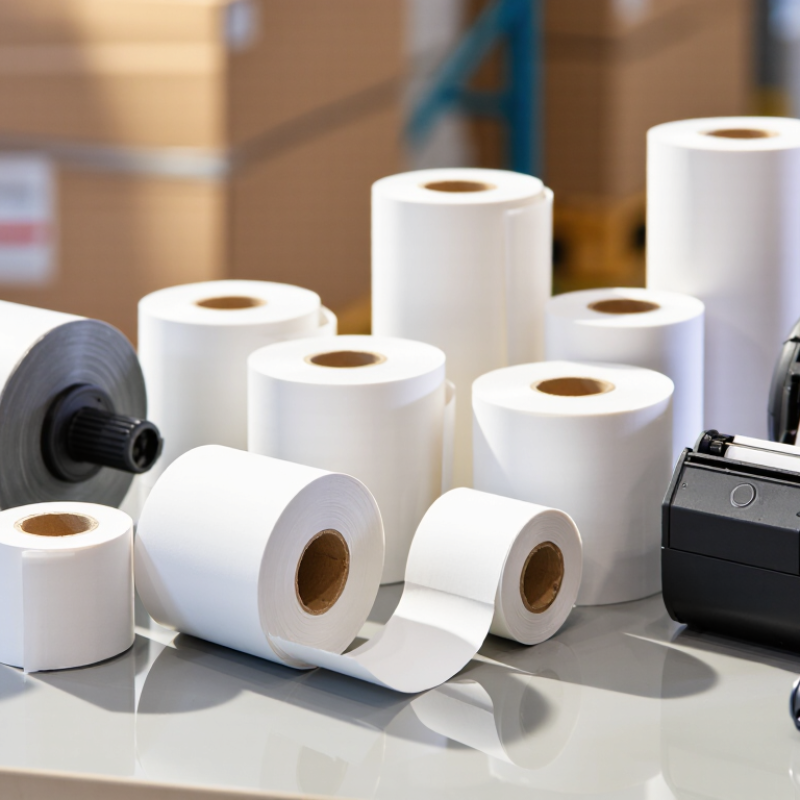
2026 Best Thermal Paper Rolls for Global Buyers

What Thermal Paper Rolls Are and How They Work

Thermal paper rolls are coated paper products designed to print without ink or toner. Their surface contains heat-sensitive chemicals, including a color-forming dye and a developer. When a thermal printer head touches the coating, tiny heated points create letters, numbers, or barcodes. The process is fast and quiet.

A suitable roll must match the printer’s width, core size, outer diameter, and winding direction. A 57 mm roll will not fit a 58 mm holder reliably. Paper thickness also affects loading and printing performance. In practical quality checks, clear black images, smooth edges, and steady feeding matter more than appearance alone. A roll may look perfect yet fade after exposure to sunlight, heat, plastic packaging, or hand oils. That detail is easy to miss.

Tips: Store rolls in a cool, dry, dark place. Keep them away from solvents and direct sunlight. Ask suppliers for coating specifications, shelf-life data, and compliance documents required in your target market. Phenol-free options may support changing regional requirements, but the term should be verified through technical records. Test samples inside your actual printers before placing a large order. Small variations in paper and printer settings can produce uneven results. I would not rely only on a product photograph; it cannot show fading resistance or coating stability.

Which Thermal Paper Specifications Matter for Global Buyers

For global buyers, thermal paper specifications matter more than a low unit price. Smithers’ 2024 market assessment valued the global thermal paper market at several billion U.S. dollars, with steady growth linked to retail, transport, and payment printing. Yet, market size does not guarantee roll compatibility. Width and core diameter must match the printer exactly. A one-millimeter error can cause feeding problems. Common retail rolls use paper around 48–65 gsm, but thickness varies by supplier.

Print quality depends on thermal sensitivity, image density, and coating uniformity. High-sensitivity paper prints clearly with less heat, which may reduce battery and printhead stress. However, overly sensitive coating can create dark marks in hot warehouses. For export shipments, buyers should check humidity resistance, curl control, and shelf life. EU rules restrict BPA in thermal paper, while other markets may set different chemical requirements. Request current compliance documents, not old certificates. Reports from the European Thermal Paper Association also emphasize safer developer systems and controlled chemical content.

Tips: Test samples in the actual printer. Measure core size, roll length, and caliper. Store cartons below excessive heat and humidity. Ask for batch-level inspection records. A perfect specification sheet does not exist; field testing still matters. I would also avoid judging quality by whiteness alone. Some bright rolls fade faster under sunlight.

How to Compare the Best Thermal Paper Roll Types in 2026

Comparing thermal paper rolls in 2026 requires more than checking price per carton. Measure width, outer diameter, core size, and roll length against each printer model. A roll that looks economical may finish quickly or jam because its core is too large. Standard direct thermal paper suits receipts and tickets, while top-coated paper offers stronger resistance to moisture, heat, and frequent handling. For labels, choose a grade matched to adhesive strength and surface conditions.

Tips: Request samples before placing a large order. Print small text, barcodes, and grey images. Store rolls in cool, dry, dark conditions. Ask suppliers for coating details and test reports. Also verify whether the paper meets current chemical and recycling requirements in the destination market. Requirements can differ widely.

During inspection, rub printed areas with a dry finger and a damp cloth. Check fading after brief exposure to sunlight or warm storage. Phenol-free options may support stricter purchasing policies, but “eco-friendly” claims need evidence. Request measurable specifications instead.

I have seen buyers overlook packaging quality; crushed edges can create feeding problems even when the paper itself is excellent. No roll is perfect. A practical comparison should balance print life, surface performance, transport protection, and total delivered cost. Sample testing remains the most reliable step.

How to Evaluate Suppliers, Certifications, and Global Compliance

2026 Best Thermal Paper Rolls for Global Buyers

Supplier evaluation should begin with traceable evidence, not attractive pricing. Request the mill’s factory address, batch records, coating specifications, and recent independent test reports. The Smithers report The Future of Thermal Paper to 2028 identifies retail, logistics, and healthcare as continuing demand sectors. These users need consistent image density, clean cutting, and stable performance during transport. Ask suppliers to provide results for basis weight, caliper, roll length, moisture, and print durability. Small variations can cause printer jams.

Compliance requires country-specific checks. In the European Union, Commission Regulation (EU) 2016/2235 restricts bisphenol A in thermal paper to 0.02% by weight from January 2020. Do not accept “BPA-free” as complete proof. Request declarations covering BPS, other developers, REACH, and applicable chemical restrictions.

ECHA’s regulatory work shows that replacement chemicals still require careful assessment. Certifications help, but they are not magic. ISO 9001 supports process control; it does not certify every roll.

For forestry claims, verify a valid chain-of-custody certificate and certificate number. For sensitive applications, require migration, fading, abrasion, and aging tests from an accredited laboratory. Samples should be tested on the buyer’s actual printers. This is often overlooked. A supplier may pass laboratory testing yet fail under heat, sunlight, or humid warehouses. Keep approval records, inspection photos, and retained samples for every production batch. Supplier audits remain useful, although even a good audit can miss seasonal process changes.

How to Select, Store, and Import Thermal Paper Rolls Efficiently

2026 Best Thermal Paper Rolls for Global Buyers

Selecting thermal paper starts with the application, not the lowest quotation. Grand View Research valued the global thermal paper market at about USD 4.2 billion in 2023. Its report forecasts roughly 6% annual growth through 2030. This growth increases pressure on buyers to verify quality carefully. Choose paper by printer model, roll width, core diameter, winding direction, and required shelf life. Request samples before placing a full container order. Test barcode readability, print darkness, curling, and image fading after heat exposure. Small tests prevent expensive surprises.

Storage conditions directly affect performance. Keep rolls in sealed cartons, away from sunlight, dust, heaters, and chemical vapors. A practical target is 18–25°C and 40–60% relative humidity. Use first-in, first-out rotation. Do not store cartons directly on concrete floors. Moisture can deform the cores. It can also weaken the coating. Smithers’ The Future of Thermal Papers to 2029 highlights continued demand from point-of-sale and logistics labels, while emphasizing sustainability and coating performance. The report’s message is useful: volume is growing, but specifications are becoming stricter.

Import efficiency depends on clear documents and realistic planning. Confirm net weight, gross weight, carton dimensions, HS classification, packing list, commercial invoice, and agreed Incoterms. Ask for production lead time and container-loading photos. Keep a retained sample from every shipment. That habit has saved more than one investigation. Still, forecasts are not guarantees. Port delays, humidity, and changing customs requirements can disrupt a perfect plan. Build safety stock around actual consumption, not optimistic estimates. A cheap roll is costly when printers stop.

2026 Best Thermal Paper Rolls for Global Buyers - How to Select, Store, and Import Thermal Paper Rolls Efficiently

Application Typical Roll Width Typical Roll Length Recommended Paper Weight Core Size Common Surface Type Typical Print Life Best Selection Criteria Storage Requirements Import Inspection Points
Retail POS Receipts 57 mm or 80 mm Approximately 18–80 m, depending on paper thickness and roll diameter 48–65 g/m² 12 mm, 17 mm, or 25.4 mm; confirm printer compatibility Standard direct thermal, white or colored back marks Approximately 1–3 years under normal indoor conditions Match width, maximum outside diameter, core diameter, and paper sensitivity with the printer specification Keep sealed in a cool, dry, dark area; avoid direct sunlight, heat, moisture, and chemical vapors Check width tolerance, winding direction, roll diameter, core size, coating uniformity, and print contrast
Payment Terminal Rolls 57 mm or 58 mm Approximately 10–40 m 48–60 g/m² 12 mm or 13 mm is common; verify the terminal holder Smooth direct thermal coating for fast, low-energy printing Approximately 1–2 years for ordinary transaction records Select a low-dust, smooth grade that feeds reliably through compact mechanisms Store below approximately 25 °C where practical and protect from humidity and ultraviolet light Test feeding, cutting, image density, blackening speed, and resistance to friction
Mobile and Portable Printers 57–80 mm Approximately 10–30 m 48–65 g/m² 12 mm or 17 mm High-sensitivity direct thermal coating Approximately 1–3 years, depending on exposure Prioritize low activation temperature, consistent coating, light roll weight, and stable winding Keep rolls in their original packaging until use; prevent compression and edge damage Confirm outside diameter, roll weight, core clearance, print speed, and battery-friendly performance
ATM and Banking Receipts 80 mm or 82.5 mm Approximately 30–100 m 55–75 g/m² 17 mm, 25.4 mm, or equipment-specific cores High-sensitivity or high-durability direct thermal grade Approximately 3–7 years when stored correctly Use a grade with stronger image stability, clean cutting, and consistent caliper Keep away from plasticizers, oils, solvents, adhesive materials, and prolonged heat Review image permanence, coating weight, caliper, core accuracy, and compatibility with the cutter
Self-Service Kiosk Tickets 80 mm, 100 mm, or equipment-specific widths Approximately 50–150 m 60–90 g/m² 25.4 mm or machine-specific cores Durable direct thermal paper, sometimes with protective top coating Approximately 3–7 years indoors; shorter under outdoor exposure Choose higher tear strength, stable caliper, low curl, and reliable separation at high speed Use pallet protection, humidity control, and first-in-first-out inventory rotation Check tensile strength, tear behavior, curl, splice policy, roll concentricity, and long-run feeding
Shipping and Logistics Labels 50–104 mm, commonly 100 or 102 mm Approximately 20–100 m 65–90 g/m² 25.4 mm or 76.2 mm, depending on printer design Direct thermal label stock with adhesive backing Approximately 6–12 months for standard direct thermal labels; specialty grades may last longer Match adhesive type to carton, plastic, cold-chain, or rough-surface requirements Protect from moisture, heat, dust, and contact with release liners or chemicals Test adhesive tack, peel strength, liner release, barcode readability, and label dimensions
Cold-Chain and Food Labels 50–100 mm, according to label format Approximately 10–60 m 65–90 g/m², including face stock and liner where applicable 25.4 mm or 76.2 mm Moisture-resistant direct thermal label material Usually months rather than many years; depends on temperature, condensation, light, and handling Select an adhesive and face material rated for refrigerated or frozen surfaces Store at stable room temperature before use; avoid condensation and premature exposure to cold rooms Conduct application tests at the actual surface temperature and verify barcode readability after condensation
Medical and Laboratory Records 57 mm, 80 mm, or instrument-specific widths Approximately 10–60 m 55–75 g/m² 12 mm, 17 mm, or equipment-specific cores High-stability direct thermal grade; some applications require protective lamination Approximately 5–10 years only when the specified archival grade and storage conditions are used Confirm resistance requirements for disinfectants, hand creams, plasticizers, and repeated handling Store in the dark at controlled temperature and humidity; avoid PVC folders and solvent contact Request chemical-resistance, image-stability, biocompatibility, and application-specific test documentation
Parking and Transport Tickets 54–80 mm Approximately 20–80 m 55–75 g/m² 12 mm, 17 mm, or 25.4 mm Direct thermal paper with optional security or colored back printing Approximately 1–5 years, depending on outdoor exposure Balance fast printing, tear resistance, image stability, and resistance to handling Protect from heat, sunlight, moisture, and contact with oils or solvents Inspect perforation, color density, reverse printing, ticket dimensions, and machine feeding performance
Large-Format Thermal Jumbo Rolls Typically supplied as parent rolls; slit widths are customized Determined by parent-roll diameter and basis weight 48–90 g/m² Commonly 76.2 mm or 152.4 mm for converting equipment Base thermal paper for slitting and rewinding Depends on the final converted product and storage conditions Evaluate jumbo-roll width, caliper consistency, moisture profile, coating uniformity, and splice control Store horizontally on pallets, protected from impact, water, sunlight, and rapid temperature changes Verify roll diameter, web width, moisture, basis weight, caliper, edge quality, and packaging strength
Buyer and Importer Checklist: Confirm the printer model and roll dimensions before ordering; request a technical data sheet and sample rolls; specify paper basis weight, caliper, coating sensitivity, core diameter, maximum outside diameter, winding direction, packaging method, and acceptable defect limits. Chemical-substance requirements, labeling rules, customs classification, and documentation vary by destination country, so verify the applicable local regulations before shipment.

FAQS

What is thermal paper, and how does it work?

Thermal paper has a heat-sensitive coating. Heated printer points create text, numbers, and barcodes without ink or toner. Printing is fast and quiet.

How should I choose the correct roll size?

Match the printer’s width, core size, outer diameter, winding direction, and thickness. A 57 mm roll may not fit a 58 mm holder. Check the actual printer.

What should I test before buying in bulk?

Print small text, barcodes, and grey images. Check black density, smooth feeding, clean edges, and cutting quality. Test actual machines first.

What is the difference between standard and top-coated thermal paper?

Standard paper suits receipts and tickets. Top-coated paper resists moisture, heat, and frequent handling better. Label paper must match the adhesive and surface conditions.

How can I reduce fading during storage?

Store rolls in a cool, dry, dark place. Avoid direct sunlight, heat, solvents, plastic packaging, and oily hands. Fading happens quietly.

What supplier information should buyers request?

Request factory traceability, batch records, coating details, roll length, moisture data, and thickness measurements. Ask for recent independent test reports. Product photos are not enough.

What compliance documents are useful?

Request market-specific chemical declarations and recycling information. Check restricted developers and relevant chemical requirements. “Phenol-free” claims need technical evidence.

How can I inspect delivered rolls?

Rub printed areas with a dry finger and damp cloth. Check fading after brief sunlight and warm storage. Inspect crushed edges and feeding problems.

Do certificates guarantee consistent quality?

No certificate proves every roll. Keep approval records, inspection photos, and retained samples from each batch. A good audit can still miss seasonal changes.

Is the lowest price usually the best choice?

Not always. Compare print life, roll length, transport protection, printer performance, and total delivered cost. No roll is perfect.

Conclusion

This guide to the 2026 best Thermal Paper Rolls for global buyers explains how thermal paper works and why heat-sensitive coating, roll construction, and printer compatibility are essential to reliable printing. It examines the specifications that matter most, including paper width, length, thickness, core size, print clarity, image durability, and resistance to heat, light, and moisture. Buyers will also learn how to compare different roll types according to their intended use, equipment requirements, storage conditions, and total purchasing cost.

The article further presents a practical framework for evaluating suppliers, quality documentation, certifications, production consistency, packaging, and international compliance. It also offers guidance on selecting the appropriate rolls, protecting them during storage, planning quantities, checking shipping requirements, and organizing imports efficiently. By considering performance, safety, supply reliability, and long-term value together, global purchasers can make informed decisions and establish a dependable sourcing process for Thermal Paper Rolls.


Sienna

Sienna

Sienna is a skilled marketing professional with a deep expertise in our company’s core products and services. With a passion for innovation and detail, she plays a pivotal role in crafting insightful blog posts that not only highlight the unique features of our offerings but also provide valuable......