Choosing the right Receipt Paper in 2026 is more complex than selecting the lowest quoted price. Global buyers must match paper type with printer technology, transaction volume, storage conditions, and local customer expectations.
Thermal paper remains popular for supermarkets, restaurants, transport counters, and self-service kiosks. It prints quickly without ink, but heat, sunlight, and poor storage can affect image durability. Bond paper still suits impact printers and certain long-term record systems. Carbonless paper supports multi-copy forms, although it requires compatible pressure-based equipment and careful handling.
Small details often decide purchasing success. A 58-millimeter roll may not fit a 80-millimeter printer. A core that looks standard may jam the machine. Humid warehouses can soften paper edges, while dry environments may increase static and feeding problems. Buyers should check roll width, length, core size, coating quality, winding direction, and packaging strength before placing large orders.
No sample replaces a live test. Request trial rolls and print them during normal operating hours. Review darkness, cutting performance, curling, odor, and readability after several days. Suppliers should provide clear specifications, stable batch quality, responsible material information, and practical after-sales support. Claims about sustainability also deserve evidence, not attractive wording alone.
Some recommendations remain conditional. The best Receipt Paper for a pharmacy may fail in a busy parking terminal. A cheaper roll may create hidden costs through jams, faded records, or frequent replacement. This guide compares major paper types for global buyers and highlights the trade-offs that matter before a 2026 purchasing decision.
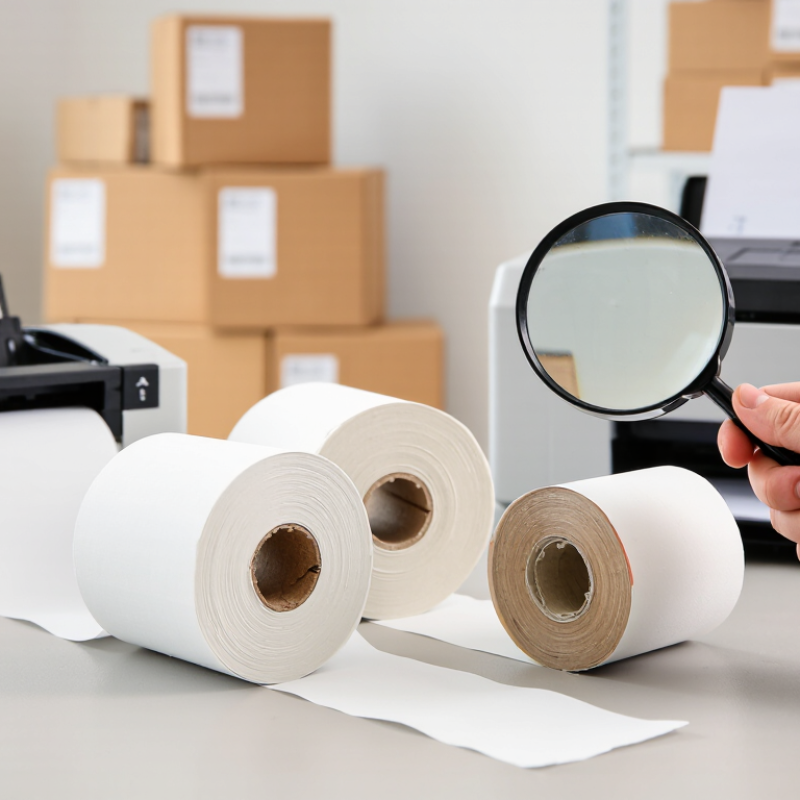
Receipt paper is a coated paper designed to record transaction details. Thermal paper creates text through heat, without ink or ribbons. Bond paper needs ink, while carbonless paper transfers writing between multiple sheets.
Paper type affects readability, equipment life, storage, and environmental handling. Thermal paper suits fast checkout counters because printing is quiet and immediate. However, heat, sunlight, plasticizers, and moisture can darken the surface. The International Organization for Standardization recommends controlled storage conditions for paper records, yet real warehouses are rarely perfect. A cool, dry cabinet still matters.
Market data shows why this choice deserves attention. Grand View Research valued the global thermal paper market at about 4.3 billion dollars in 2023 and projected growth through 2030. Smithers’ industry outlook also links demand to retail, transport, healthcare, and self-service terminals. Growth does not make every roll suitable. Width, core size, roll length, coating sensitivity, and printer temperature must match the device.
Chemical content requires careful review. European restrictions limited bisphenol A in thermal paper to 0.02% from 2020, according to the European Chemicals Agency. Buyers should request current safety documentation and ask whether bisphenol alternatives are used. “Phenol-free” claims need verification, not assumptions. I would also test sample rolls after prolonged storage. A clean print today may fade later, and that possibility is easy to underestimate.
2026 Best Receipt Paper Types for Global Buyers?
How to Compare Thermal, Bond, and Carbonless Receipt Paper
Thermal paper is fast, quiet, and ribbon-free. Thermal is fast. It prints through heat-sensitive coating, making it suitable for busy checkout counters and delivery terminals. However, heat, sunlight, plasticizers, and rough storage can reduce image quality. Grand View Research estimates the global thermal paper market at about US$4.6 billion in 2023, with a projected 5.1% annual growth rate through 2030. Smithers also identifies point-of-sale and logistics as continuing demand areas in its Future of Thermal Printing to 2029 report. These figures support thermal growth, but they do not guarantee long-term readability.
Bond paper uses ink or ribbon and usually withstands light exposure better. It suits invoices, archives, and receipts requiring clearer retention. Carbonless paper creates duplicate or triplicate copies through pressure-sensitive coatings. It helps when one transaction needs customer, warehouse, and accounting records. Bond needs more printer maintenance. Carbonless needs careful pressure calibration. Details matter.
Global buyers should compare roll width, core diameter, coating quality, humidity resistance, and storage conditions. Ask for technical data sheets and test samples before ordering. For long retention, evaluate paper against ISO 9706 requirements rather than trusting marketing language. A small thermal roll may fade in a hot vehicle. That assumption is tempting, but incomplete. I would test every paper beside the actual printer, especially in humid routes and bright retail spaces.
Thermal paper prints through heat and normally produces one original copy without ink or toner. Bond paper commonly uses ink or toner and is suitable for standard single-copy receipts. Carbonless paper uses pressure-sensitive coatings to create multiple copies, making it useful for delivery notes, invoices, and manually completed transaction records.
Representative commercial values: basis weight is shown per sheet. Thermal paper is commonly available around 48–80 gsm, bond paper around 55–90 gsm, and carbonless sheets around 40–80 gsm. Carbonless forms commonly contain 2–6 parts; three parts are shown as a representative configuration.
Choosing receipt paper depends on the working environment, not only the purchase price. Direct thermal paper suits supermarkets, cafés, and ticket counters with fast printing needs. It produces sharp text without ink ribbons. However, heat, sunlight, and plastic contact can darken or fade the print.
For warehouses, clinics, and offices, bond paper remains a practical option. It handles frequent writing, stamping, and filing better than standard thermal rolls. Businesses needing longer record life may choose durable synthetic paper. It resists moisture and tearing, which helps in kitchens, delivery areas, and outdoor service points. Still, synthetic rolls can cost more and may require printer compatibility checks.
I have found that paper performance changes noticeably between dry stores and humid counters. A roll that works well in a quiet office may curl near a hot kitchen printer. That detail is easy to miss. Buyers should test paper with their actual printers, storage conditions, and average daily volume. Supplier specifications are useful, but real workplace trials are more reliable.
Tips: Check roll width, core size, thickness, and coating before ordering. Store rolls away from heat, water, and direct sunlight. For customer receipts, choose clear contrast and smooth feeding. For long-term records, confirm durability through documented testing rather than assumptions.
Global buyers should treat receipt paper as a printer component, not a generic office consumable. Material choice affects image clarity, storage life, jams, and workplace handling. Start with the machine manual. Check the required roll width, outer diameter, core diameter, winding direction, and paper sensitivity. Direct thermal printers need heat-reactive coating. Impact printers require bond paper and ribbon. Mixing these formats can produce faint text or mechanical damage.
Do not assume a familiar size fits every market. Measure samples with calipers. Common widths vary, while core dimensions and maximum roll diameters often create hidden compatibility problems. Printer sensors may also reject rolls with unsuitable gaps, marks, or winding. Ask suppliers for technical data sheets, safety documentation, coating information, and batch traceability. Regional rules may restrict certain chemical developers or require specific disclosure language. Compliance evidence should match the shipping destination, not merely the manufacturing country.
Samples reveal what certificates cannot. Run several rolls through the actual printer. Check first-print darkness, feeding noise, curl, cutting, and readability after storage. Test before scaling. A perfect checklist can still miss field conditions. Warehouse dust, uneven loading, and rushed operators change results. In practical purchasing work, small pilot orders often expose problems earlier than attractive bulk pricing. Keep records of lot numbers, test dates, storage conditions, and printer settings for reliable repeat purchases.
For global buyers, reliable receipt paper starts with the printer, not the lowest quote. Confirm roll width, diameter, core size, winding direction, and paper thickness before requesting samples. A small mismatch can cause jams, weak feeding, or unreadable receipts. In practice, testing ten rolls across different storage conditions reveals more than a polished specification sheet.
Thermal coating quality matters. It controls print contrast, fading, and resistance to heat, moisture, and plasticizers. Grand View Research estimated the global thermal paper market at about USD 4.2 billion in 2023, with continued growth expected through 2030. This expansion increases supplier choices, but not necessarily supplier reliability. Ask for coating performance data, batch traceability, and a certificate showing restricted substances meet the destination market’s requirements. Request samples from the intended production batch.
Storage deserves equal attention. The ISO 183 standard recommends controlled conditions for testing printed images, yet warehouses rarely behave like laboratories. Keep cartons away from sunlight, heaters, solvents, and high humidity. Some receipts still fade unexpectedly. That is a useful warning, not a minor defect. The Smithers report on thermal printing also highlights durability and material efficiency as continuing industry priorities. Buyers should compare image life, roll length, dust levels, and packaging strength, rather than paper weight alone. A documented pre-shipment inspection can expose loose winding, uneven coating, or crushed cores before international delivery.
| Receipt Paper Type | Printing Method | Typical Applications | Main Advantages | Main Limitations | Storage Guidance | International Purchasing Considerations | Overall Suitability |
|---|---|---|---|---|---|---|---|
| Standard Thermal Paper | Heat-sensitive coating creates an image without ink or ribbon. | Retail receipts, self-service kiosks, queue tickets and payment terminals. | Fast printing, low noise, simple machine maintenance and low consumable complexity. | Images can fade or darken when exposed to heat, sunlight, friction, chemicals or moisture. | Keep cool, dry and away from direct sunlight, plasticizers and chemical vapors. | Confirm printer compatibility, roll dimensions, core size and required image durability before ordering. | ★★★★★ |
| Top-Coated Thermal Paper | Thermal printing with a protective top layer over the heat-sensitive coating. | Receipts requiring improved resistance to handling, moisture, oil or abrasion. | Better surface protection and print stability than basic thermal grades; smoother handling. | Usually costs more and may require closer specification control during procurement. | Store in a sealed, temperature-controlled area; avoid prolonged exposure to light and heat. | Request test rolls and verify resistance requirements using the buyer’s actual printer and operating conditions. | ★★★★★ |
| BPA-Free Thermal Paper | Thermal printing using a developer system that does not use bisphenol A. | General retail and service receipts where regulatory or customer-safety requirements apply. | Supports procurement policies that restrict BPA and can simplify compliance documentation. | “BPA-free” does not automatically describe the complete chemical formulation or overall durability. | Use the supplier’s recommended conditions and protect from heat, light, moisture and pressure. | Ask for a current declaration of compliance and identify the alternative developer used in the coating. | ★★★★★ |
| Phenol-Free Thermal Paper | Thermal printing using a phenol-free developer formulation. | Markets or organizations with stricter chemical-screening and sustainability requirements. | Helps address broader restrictions on phenolic developers beyond BPA-specific requirements. | Availability, price and performance can vary by formulation and converting quality. | Follow the technical data sheet; avoid high temperature, intense light and contact with reactive materials. | Define “phenol-free” contractually and request independent test reports or a signed material declaration. | ★★★★★ |
| Direct Thermal Adhesive Label Stock | Heat-sensitive facestock produces text or barcodes without an ink ribbon. | Shipping labels, weighing labels, shelf labels and short-life logistics identification. | Efficient on-demand printing and fewer consumables; adhesive backing supports direct application. | Thermal sensitivity and adhesive performance depend on the face material, liner and application surface. | Protect from humidity, dust, heat and pressure; store flat when supplied in sheets or fanfold form. | Specify liner type, adhesive grade, label dimensions, core, winding direction and destination climate. | ★★★★☆ |
| Carbonless Copy Paper | Pressure-sensitive microcapsules transfer an image to one or more copy sheets. | Multi-part invoices, delivery notes, service forms and handwritten transaction records. | Creates duplicate or triplicate copies without carbon sheets or electricity. | Not suitable for thermal printers; copies require correct sheet sequence and sufficient writing pressure. | Keep dry and protected from excessive heat, pressure, light and chemicals. | Confirm set configuration, sheet weight, color sequence, cut size and packing method for customs handling. | ★★★☆☆ |
| Bond or Woodfree Paper | Inkjet, impact-dot-matrix or other ink-based printing, depending on the printer. | Traditional cash-register receipts, invoices, forms and records requiring long-term readability. | Good compatibility with ordinary writing and ink-based systems; does not rely on a heat-sensitive coating. | Requires ink, ribbon or toner; print quality depends strongly on the printer and ink system. | Store flat in a clean, dry environment away from excessive humidity and direct sunlight. | Confirm paper brightness, basis weight, roll or sheet format, core dimensions and printer mechanism. | ★★★★☆ |
| Recycled Thermal Paper | Thermal printing on a paper base containing recycled fiber, subject to the product specification. | Routine receipts where a reduced virgin-fiber content is part of the purchasing policy. | Can support recycled-content targets while retaining the convenience of direct thermal printing. | Recycled content, whiteness, coating consistency and available certifications vary by product. | Use the same protective storage practices as other thermal grades. | Request verified recycled-content evidence and check print density, dust level and roll-converting quality. | ★★★★☆ |
| Synthetic Thermal Media | Thermal printing on a plastic or synthetic film substrate. | Outdoor labels, wet environments, cold-chain handling and applications needing tear resistance. | Higher resistance to water, tearing and rough handling than ordinary paper-based media. | Higher cost and different recycling considerations; not every thermal printer is optimized for it. | Store in the original packaging and avoid extreme heat, direct sunlight and deformation. | Confirm environmental limits, printer settings, recyclability requirements and transport-temperature exposure. | ★★★★☆ |
| Long-Life Archival Thermal Paper | Thermal printing with a formulation designed for improved image stability. | Records, warranties, regulated transactions and receipts expected to be retained for longer periods. | Improved resistance to fading compared with ordinary thermal grades when correctly stored. | “Long-life” performance depends on storage, exposure conditions and the specific test method used. | Store in a cool, dry, dark environment; avoid PVC contact, heat, oils and chemical contamination. | Request the stated image-life test conditions and retention target rather than relying on a generic label. | ★★★★★ |
Procurement note: Before placing an international order, verify the printer model, roll width, roll length, core diameter, maximum outside diameter, paper weight or thickness, coating requirements, chemical declarations, packaging specifications, sample approval and storage conditions.
Thermal paper prints through a heat-sensitive coating, without ink ribbons. It is fast and quiet. Bond paper uses ink or a ribbon and usually tolerates light exposure better. Carbonless paper creates duplicate copies through pressure. Useful for several records.
Direct thermal printers require heat-reactive rolls. Impact printers require bond paper and ribbons. Carbonless paper needs suitable pressure and careful calibration. Mixing formats may cause faint printing or mechanical damage. Check the manual.
Confirm roll width, outer diameter, core diameter, winding direction, and paper thickness. Measure samples with calipers. A familiar width may still have the wrong core size. Printer sensors can reject unsuitable gaps, marks, or winding.
Run several sample rolls through the actual printer. Check darkness, feeding noise, curl, cutting, and readability. Test ten rolls when possible. Record lot numbers, storage conditions, and printer settings. A checklist can still miss field problems.
Heat, sunlight, plasticizers, moisture, and rough storage can weaken printed images. A roll left in a hot vehicle may fade. It happens. Store cartons away from heaters, windows, solvents, and high humidity.
Choose bond paper for invoices, archives, or receipts requiring longer visual retention. Choose carbonless paper when one transaction needs customer, warehouse, and accounting copies. Bond paper requires more maintenance. Carbonless paper needs pressure calibration.
Request technical data sheets, safety documents, coating information, and batch traceability. Ask for compliance evidence covering restricted substances in the destination market. Request samples from the intended production batch. Certificates alone are not enough.
Compare image life, roll length, dust levels, winding quality, and packaging strength. For long retention, evaluate relevant archival requirements instead of trusting marketing claims. Use controlled storage tests where possible. Real warehouses are messier than laboratories. That matters.
Keep cartons in a cool, dry, and shaded area. Avoid sunlight, heaters, solvents, and heavy humidity. Protect rolls from crushing and dust. Loose winding or damaged cores can cause feeding problems. I would inspect them again before loading.
Choosing the right Receipt Paper is essential for businesses that need clear, durable, and reliable transaction records. This article explains what receipt paper is and why its material affects print quality, storage life, readability, and operating costs. It compares thermal, bond, and carbonless paper, highlighting how each type works and which environments they suit, from retail counters and restaurants to warehouses, mobile services, and multi-copy documentation.
For international buyers, the guide also covers common roll sizes, sheet formats, printer compatibility, core dimensions, coating quality, packaging, and storage conditions. It explains how to evaluate paper against practical global purchasing requirements, including consistent specifications, dependable supply, and suitable performance across different climates. By reviewing application needs, equipment details, and supplier reliability, buyers can select Receipt Paper that supports efficient daily operations while reducing printing problems, waste, and replacement costs.

Jingkuo